
Weeks 1–2
Pain
Calm the shoulder down.
Hands-on techniques and guided rest quiet the irritated tendon, so you can sleep on that side again.
What We Treat
The catch when you reach behind your back. The ache that wakes you up on that side. It’s fixable, and it starts with a thorough evaluation, not a guess.
Sound Familiar?
Two or more? Keep reading.
Why It Happens
Your shoulder doesn’t tear for no reason. It’s usually some mix of four culprits: tendons worn thin by years of overhead motion, degeneration that speeds up with age. A sudden overload, a lift, a fall, a hard throw, that finishes off tissue already frayed. Shoulder blade muscles that stopped pulling their weight, so the rotator cuff picks up work it was never built to carry. And old compensations, a stiff upper back, a weak core, quietly funneling more strain into that one joint.
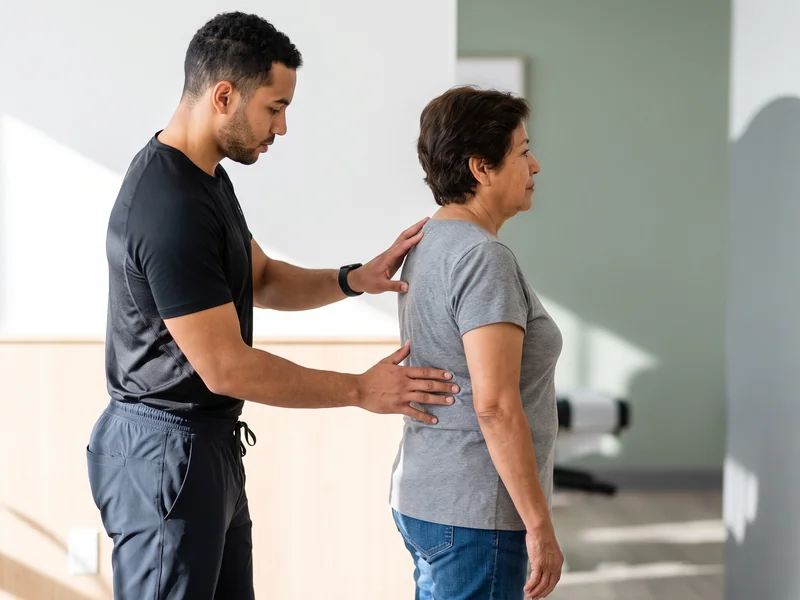
None of that shows up from a shrug test in a hallway. It takes a real, thorough evaluation, one-on-one with a Doctor of Physical Therapy, to sort out which combination is driving your shoulder. That’s why a sling and hoping so often falls short, and why not every tear needs a scalpel. Find the actual driver, and a non-surgical plan becomes possible.
The Honest Truth
Nobody regrets starting too early. Every week, someone in our clinic says they regret waiting.
How We Fix It
Every plan has an endpoint. Here’s what the four phases look like for a torn or strained rotator cuff.
Weeks 1–2
Pain
Hands-on techniques and guided rest quiet the irritated tendon, so you can sleep on that side again.
Weeks 2–6
Prime
Targeted mobility work restores the overhead motion you’ve been avoiding, without the pinch.
Weeks 6–10
Perform
Progressive rotator cuff and scapular strengthening rebuilds the stability the joint was missing in the first place.
Weeks 10+
Prevent
Overhead load gets tested under real conditions before you’re cleared to go all-in: that’s the endpoint, not just another appointment.
A thorough evaluation and hands-on care from a Doctor of Physical Therapy, every visit: that’s the reputation we’ve built it on.
Rated 5.0 on Google · 553 reviews
Week 1: couldn’t lift a coffee mug without wincing
Week 10: back to a full golf swing, no guarding
Questions, Answered
Usually not right away. Rotator cuff tears show up on MRIs of shoulders that don’t hurt at all, especially as we get older, so a scan alone doesn’t tell the whole story. We start with a thorough, hands-on evaluation to find what’s actually driving your pain and weakness. If imaging becomes genuinely useful for your case, we’ll help you get it. You don’t have to wait on a scan to start feeling better.
In most cases, yes, and the right movement is part of the fix. Total rest lets the surrounding muscles weaken further, which makes the shoulder less stable, not more. The key is dosing motion and load correctly for your specific tear, which is exactly what a Doctor of Physical Therapy sorts out at your evaluation, then progresses safely as you improve.
Most patients feel meaningful change within 4–6 visits. A full plan for a rotator cuff tear runs through all four phases, Pain, Prime, Perform, and Prevent, typically over 8–10 weeks, depending on the tear and how long you’ve been dealing with it. Either way, you get a plan with an endpoint: you’ll always know which phase you’re in and what’s left, not an open-ended string of appointments.
Book Your Visit
Request a time and a real person calls you back, usually within two business hours. No phone tree. No ‘someone will reach out.’ Just a plan.
5 · 553+ Google reviews
Typical response: under 2 business hours
Step 1 of 5
That’s the hard part done. We’ll call during business hours to lock in your time. Most people are on the schedule same week.
Visit Us