
1
We find the tight, restricted tissue.
You’ve seen the marks on elite athletes. Here’s what the suction is actually doing for stiff, stuck soft tissue.
What It Is
You’ve probably noticed the circular marks on high-profile athletes at the Olympics or on the sideline. Cupping isn’t new, but it’s more visible now than ever, and there’s a reason it keeps showing up on serious competitors.
Cupping uses gentle suction to lift the skin and tissue layer away from what’s underneath. That negative pressure increases blood flow to the area and helps release tissue that’s tight, stuck, or restricted: the opposite of the compression you get from a typical massage.
It’s not a stand-alone fix. It’s a tool your Doctor of Physical Therapy uses alongside your plan to help stubborn areas loosen up faster.
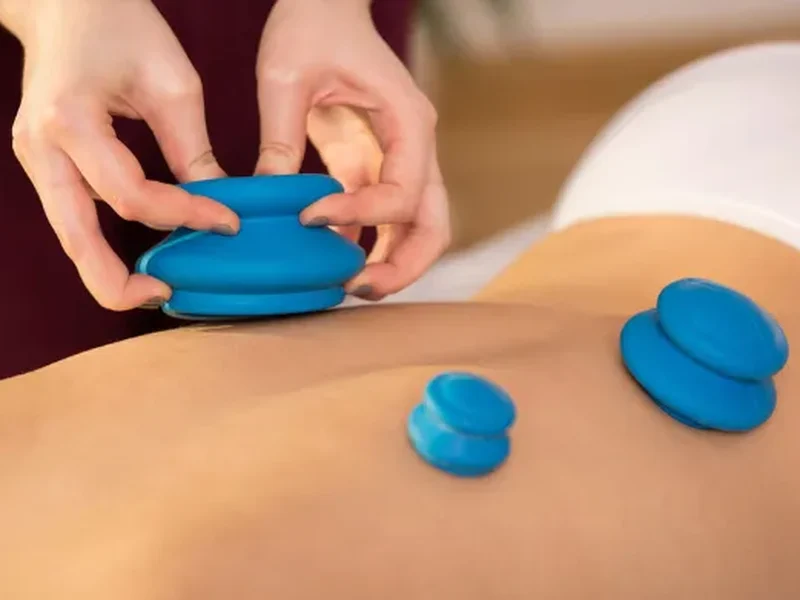 Always optional, never sprung on you
What It Helps
If a spot stays tight and restricted no matter how much you stretch it, cupping is often what finally moves it.
What A Session Looks Like
1
We find the tight, restricted tissue.
2
We apply the cups and let suction work.
3
We move the area to lock in the release.
Why It Works
Reaches tissue compression massage can’t.
Increases blood flow to stuck, restricted areas.
Quick to apply, and always optional.
Fits the plan you’re already on.
Pairs Well With
Questions, Answered
Most people feel pulling or tightness from the suction, not pain. It’s common to get temporary, painless circular marks afterward, similar to what you may have seen on athletes, and they typically fade within a few days. It’s always optional, and we explain exactly what to expect before we ever apply a cup.
Often, yes, at least temporarily. The marks come from increased blood flow to the area, not bruising from injury, and they’re painless. They usually fade within a few days to a week depending on your skin and how tight the tissue was.
Cupping is typically billed within your physical therapy visit, and coverage varies by plan. We verify your exact benefits before your first session, so there’s no surprise on your bill. Questions before then? Call us at (865) 351-0615.
Book Your Visit
Request a time and a real person calls you back, usually within two business hours. No phone tree. No ‘someone will reach out.’ Just a plan.
5 · 553+ Google reviews
Typical response: under 2 business hours
Step 1 of 5
That’s the hard part done. We’ll call during business hours to lock in your time. Most people are on the schedule same week.
Visit Us