
Weeks 1–2
Pain
Calm the back pain down.
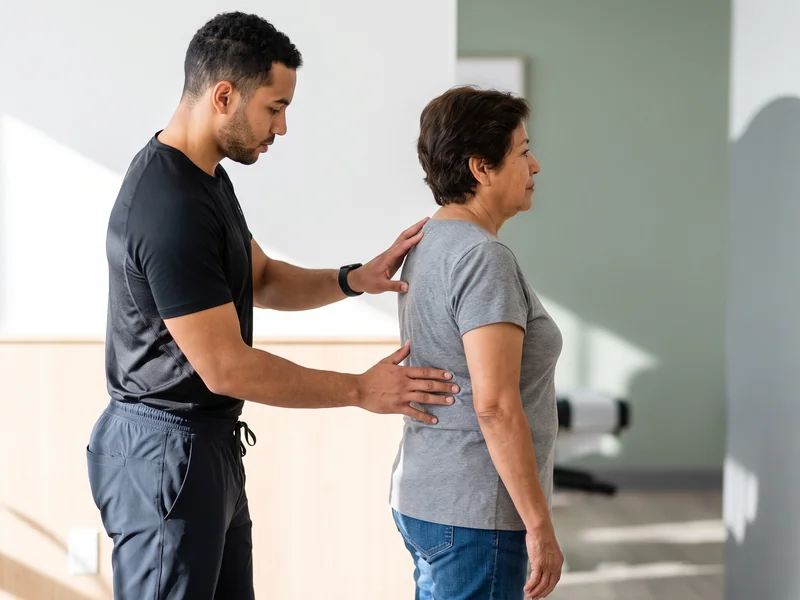
Hands-on techniques and postural correction ease the low back strain your core has been leaving unsupported.
What We Treat
Still looking pregnant months, or years, after your baby was born? That’s not just how it is now. Pelvic floor physical therapy can close the gap and rebuild the core strength underneath it.
Sound Familiar?
Two or more? Keep reading.
Why It Happens
Diastasis recti happens when the left and right sides of your rectus abdominis, your “six-pack” muscle, stretch apart at the connective tissue between them, letting the belly bulge outward. Pregnancy is the most common cause: up to 60% of pregnant women develop it by the third trimester, and more than 25% still have it a year after childbirth. Weight changes, certain exercises, and genetics can play a role too.
It’s not a hernia. The muscle itself stays intact, it just separates down the middle, so there’s no hole or tear involved. But left untreated, the separation tends to worsen, and the core weakness, pelvic floor dysfunction, and back pain that come with it can genuinely affect daily life. The good news: with the right core-focused pelvic floor program, most cases improve significantly, and many close entirely.
The Honest Truth
Most cases of diastasis recti drastically improve, or close entirely, with the right program. It’s worth finding out what’s possible for yours.
How We Fix It
Every plan has an endpoint. Here’s what the four phases look like for diastasis recti.
Weeks 1–2
Pain
Hands-on techniques and postural correction ease the low back strain your core has been leaving unsupported.
Weeks 2–6
Prime
Breathing retraining and manual therapy improve tissue quality and get your deep core muscles firing together again.
Weeks 6–10
Perform
Progressive core stabilization exercises bring the abdominal muscles back together and rebuild functional strength.
Weeks 10+
Prevent
We test your core under real lifting, exercise, and daily-life demands before clearing you to go all-in, tracked with real measurements, not guesswork.
We measure your separation and track it visit to visit, so you can actually see the gap closing: not just hope it’s working. That’s the difference a dedicated core rehab program makes.
Rated 5.0 on Google · 553 reviews
Months postpartum: visible doming, low back pain, a core that won’t engage under load
A typical recovery arc: separation measurably narrowed, core reconnected, back to lifting and training pain-free
Questions, Answered
No. With diastasis recti, your rectus abdominis muscle stays fully intact, it just separates down the middle at the connective tissue. A hernia involves an actual hole or tear that lets internal tissue push through. They can look similar from the outside, so if there’s any question, we’ll help you sort out which one you’re dealing with.
No. We treat diastasis recti in women whose kids are well past toddlerhood, not just the immediate postpartum window. The separation doesn’t heal on its own with time alone, so if you’re still dealing with it years later, targeted core rehab can still make a real difference.
Most diastasis recti plans run through all four phases, Pain, Prime, Perform, and Prevent, over about 10–12 weeks. We measure your separation at the start and re-check it as you progress, so you’ll always know exactly where things stand, not just how you feel that day.
Book Your Visit
Request a time and a real person calls you back, usually within two business hours. No phone tree. No ‘someone will reach out.’ Just a plan.
5 · 553+ Google reviews
Typical response: under 2 business hours
Step 1 of 5
That’s the hard part done. We’ll call during business hours to lock in your time. Most people are on the schedule same week.
Visit Us