
Weeks 1–2
Pain
Calm it down without a full stop.
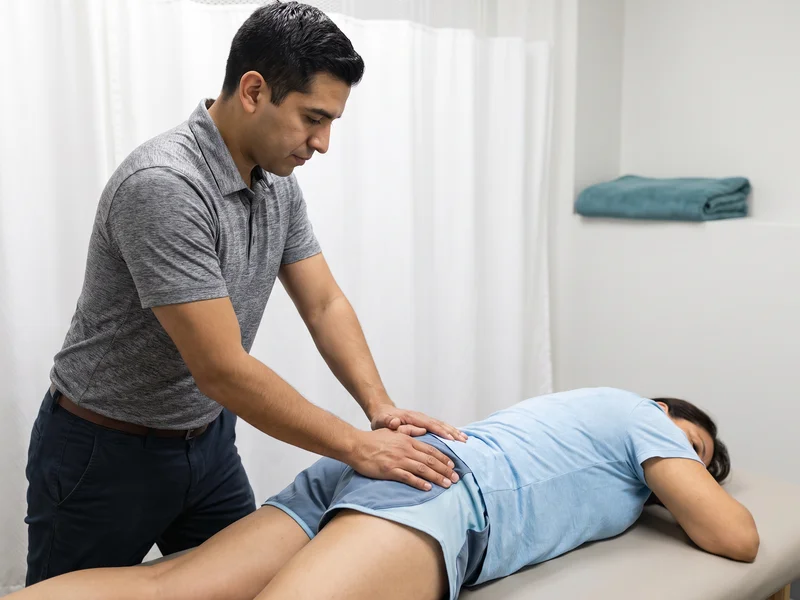
Hands-on techniques manage pain while we find ways to keep you active, not benched for weeks.
What We Treat
The elbow that aches after every match. The shoulder that’s started talking back. It’s fixable, and it starts with a thorough evaluation, not a guess.
Sound Familiar?
Two or more? Keep reading.
Why It Happens
Elbow pain from tennis or pickleball rarely starts at the elbow. It’s usually further up the chain: a shoulder that’s lost some rotation, so your arm compensates on every swing. Core and trunk mechanics that quietly shift more load onto your arm with every stroke. Grip and racquet mechanics that keep loading the same tendon the same way, point after point. And with pickleball’s surge in popularity, a lot of new players are asking those joints to do a lot, fast, without the conditioning to back it up.
You don’t wait for something to break before you fix it. That’s not who you are. That’s exactly what a real, thorough evaluation is for: finding what’s actually driving the pain, not just where it shows up, one-on-one with a Doctor of Physical Therapy.
The Honest Truth
Nobody regrets starting too early. Every week, someone in our clinic says they regret sitting out as long as they did.
How We Fix It
Every plan has an endpoint. Here’s what the four phases look like for a racquet sports injury.
Weeks 1–2
Pain
Hands-on techniques manage pain while we find ways to keep you active, not benched for weeks.
Weeks 2–6
Prime
Targeted mobility work addresses the shoulder or core mechanics that are often the real source of elbow or wrist pain.
Weeks 6–10
Perform
Progressive strengthening for your grip, shoulder, and core builds the capacity your sport actually demands.
Weeks 10+
Prevent
Your swing and mechanics get tested under real match conditions before you’re cleared to go all-in: that’s the endpoint, not just another appointment.
One-on-one time, a real evaluation, and a plan with an endpoint: that’s what keeps patients coming back and referring their family.
Rated 5.0 on Google · 553 reviews
Week 1: couldn’t finish a match before the elbow flared
Week 10: back in the Tuesday night league, full speed
Questions, Answered
Usually not right away. Elbow and shoulder imaging often shows changes in players who have zero pain, so a scan alone doesn’t explain what’s driving your symptoms. We start with a hands-on evaluation that looks beyond the elbow itself, since the real source is often the shoulder or core. If imaging becomes genuinely useful, we’ll help you get it.
Often, yes, in a modified way. Sitting out completely doesn’t fix the mechanics that caused the pain in the first place, and deconditioning just adds a second problem. The key is dosing your play and your rehab together, which is exactly what a Doctor of Physical Therapy manages at your evaluation.
Most players feel meaningful change within 4–6 visits. A full plan runs through all four phases, Pain, Prime, Perform, and Prevent, typically over 8–10 weeks, depending on how long the pain has been building. Either way, you get a plan with an endpoint: you’ll always know which phase you’re in and what’s left before you’re cleared to play.
Book Your Visit
Request a time and a real person calls you back, usually within two business hours. No phone tree. No ‘someone will reach out.’ Just a plan.
5 · 553+ Google reviews
Typical response: under 2 business hours
Step 1 of 5
That’s the hard part done. We’ll call during business hours to lock in your time. Most people are on the schedule same week.
Visit Us