
Weeks 1–2
Pain
Calm the swelling down.
Hands-on techniques and gentle motion work reduce swelling and ease guarding, starting your very first visit.
What We Treat
That stiff, guarded feeling every time you bend your new knee. Not sure yet how much you can trust it. Recovery isn’t a mystery, it starts with a thorough evaluation, not a guess.
Sound Familiar?
Two or more? Keep reading.
Why It Happens
A new knee doesn’t arrive with full motion attached. Swelling limits how far it bends at first. The quad muscle above it goes quiet after surgery and stays quiet longer than you’d expect. Scar tissue can tighten around the joint if it isn’t worked through early.
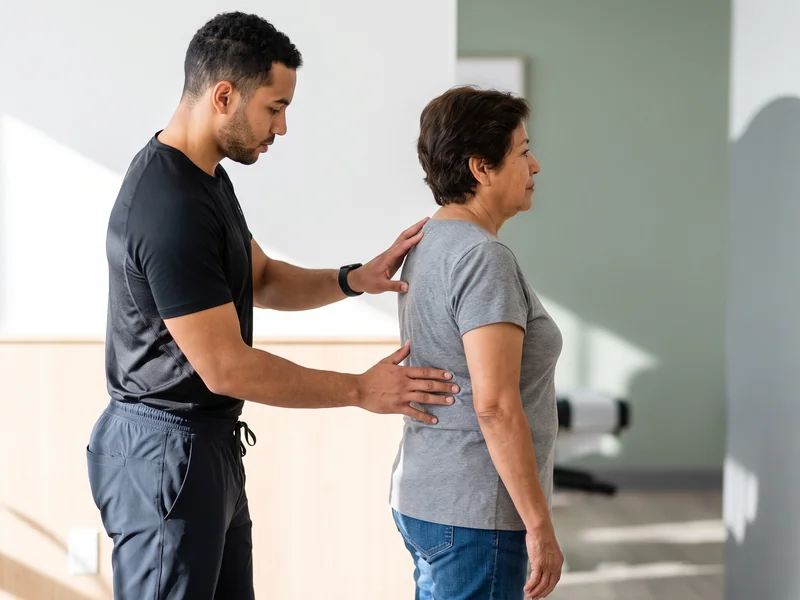
None of that resolves on its own. It takes a real, thorough evaluation to find exactly where your motion, strength, and swelling stand today. Generic exercise sheets treat every knee the same. Yours isn’t generic. Find what’s actually holding your knee back, and the plan gets obvious.
The Honest Truth
Nobody regrets starting recovery too early. Every week, someone in our clinic says they regret waiting.
How We Fix It
Every plan has an endpoint. Here’s what the four phases look like after a knee replacement.
Weeks 1–2
Pain
Hands-on techniques and gentle motion work reduce swelling and ease guarding, starting your very first visit.
Weeks 2–6
Prime
Targeted mobility work chases down the range your knee lost to surgery and scar tissue.
Weeks 6–12
Perform
Progressive quad and hip strengthening rebuilds the control your knee lost around the joint.
Weeks 12+
Prevent
Stairs, uneven ground, and getting up from the floor get tested under real conditions before you’re cleared to go all-in: that’s the endpoint, not just another appointment.
No rushed visits, no handing you off to an aide: patients consistently tell us that’s what makes the difference here.
Rated 5.0 on Google · 553 reviews
Month 1: couldn’t bend the new knee past a right angle
Month 4: back on the pickleball court for doubles
Questions, Answered
No, not usually. Your surgeon already has the imaging that matters, the x-rays that led to your new joint. What we need now is different: a hands-on look at how your knee actually bends, loads, and moves today. That’s where a thorough evaluation comes in, it tells us exactly where your motion and strength still lag, so we can build your plan around your real starting point, not a guess.
That’s exactly who this is for. Early after surgery, motion needs to be earned carefully, not forced. You’ll work one-on-one with a Doctor of Physical Therapy, every visit, who adjusts the pace to where you actually are. Whether you’re still using a walker or already off it, the plan meets you there and moves you forward safely.
Most patients see meaningful progress within the first few weeks. A full recovery plan runs through all four phases, Pain, Prime, Perform, and Prevent, typically over several months, depending on your surgery and starting point. Either way, you get a plan with an endpoint: you’ll always know which phase you’re in and what’s left, not an open-ended string of appointments.
Book Your Visit
Request a time and a real person calls you back, usually within two business hours. No phone tree. No ‘someone will reach out.’ Just a plan.
5 · 553+ Google reviews
Typical response: under 2 business hours
Step 1 of 5
That’s the hard part done. We’ll call during business hours to lock in your time. Most people are on the schedule same week.
Visit Us