
Weeks 1–2
Pain
Ease rigidity and discomfort.
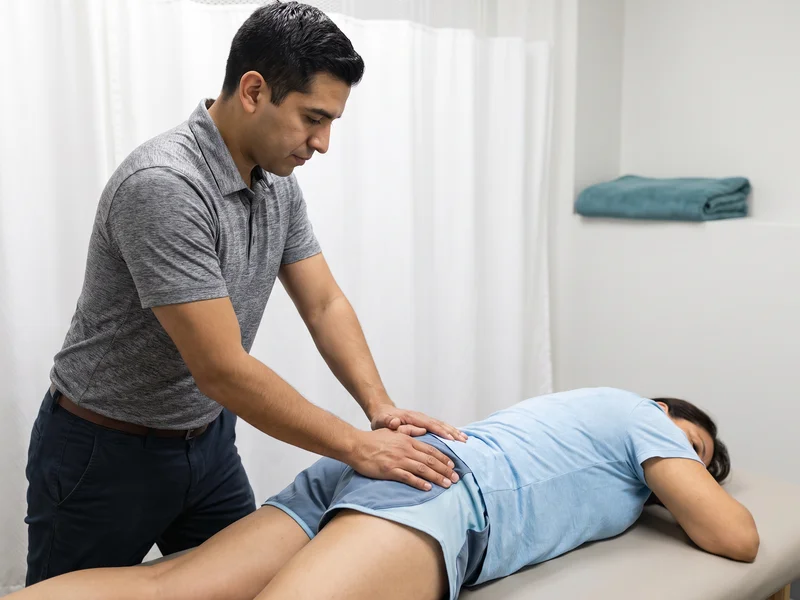
Hands-on techniques and gentle movement work reduce stiffness and calm discomfort, starting your very first visit.
What We Treat
The tremor that makes simple tasks take longer. The balance that feels less certain than it used to. Movement can still be supported, and it starts with a thorough evaluation, not a guess.
Sound Familiar?
Two or more? Keep reading.
Why It Happens
Parkinson’s is a progressive condition that affects the signals your brain sends to your muscles. Over time that can mean smaller steps, more rigidity, less automatic balance, and a tremor that’s hard to predict.
Physical therapy doesn’t reverse the underlying condition, but it can meaningfully support how you move, balance, and function day to day. A thorough evaluation looks at your specific balance, strength, and movement patterns right now, so your plan targets what’s actually changing for you, not a generic checklist.
The Honest Truth
This isn’t about chasing a cure. It’s about protecting what you can still do, for as long as possible.
How We Fix It
Every plan has a clear next step. Here’s what the four phases look like for ongoing movement support.
Weeks 1–2
Pain
Hands-on techniques and gentle movement work reduce stiffness and calm discomfort, starting your very first visit.
Weeks 2–6
Prime
Targeted mobility and balance work re-establishes the range and control that’s quietly slipped.
Weeks 6–10
Perform
Progressive strengthening and balance training builds the stability that helps you move with more confidence.
Ongoing
Prevent
Regular check-ins adjust your plan as things change, so you stay ahead of it instead of behind it.
One-on-one time, a real evaluation, and a plan with an endpoint: that’s what keeps patients coming back and referring their family.
Rated 5.0 on Google · 553 reviews
Month 1: needed a hand to stand up from the couch every time
Month 4: standing up on my own and steadier on the stairs
Questions, Answered
It helps to have one, since your neurologist manages your Parkinson’s care overall. Physical therapy works alongside that, focusing on movement, balance, and strength rather than diagnosis. If you already have a diagnosis, we can start a thorough evaluation of your movement right away.
Yes, in most cases staying active is one of the most helpful things you can do. Movement needs to be dosed to your specific balance and strength, which is exactly what a Doctor of Physical Therapy sorts out at your evaluation, then adjusts as things change over time.
That’s exactly who this is for. You’ll work one-on-one with a Doctor of Physical Therapy, every visit, who meets you at your current level and builds from there. There’s no minimum mobility required to start, only a starting point to work from.
Book Your Visit
Request a time and a real person calls you back, usually within two business hours. No phone tree. No ‘someone will reach out.’ Just a plan.
5 · 553+ Google reviews
Typical response: under 2 business hours
Step 1 of 5
That’s the hard part done. We’ll call during business hours to lock in your time. Most people are on the schedule same week.
Visit Us